A Journey of Artistic Discovery Across Europe
ULYSSES JOURNEYS FOR LIVE ELECTRONICS COMPOSING VOL 2.
Organised by ECCM, Estonia
For composers with some previous experience who want to work with live electronics composition
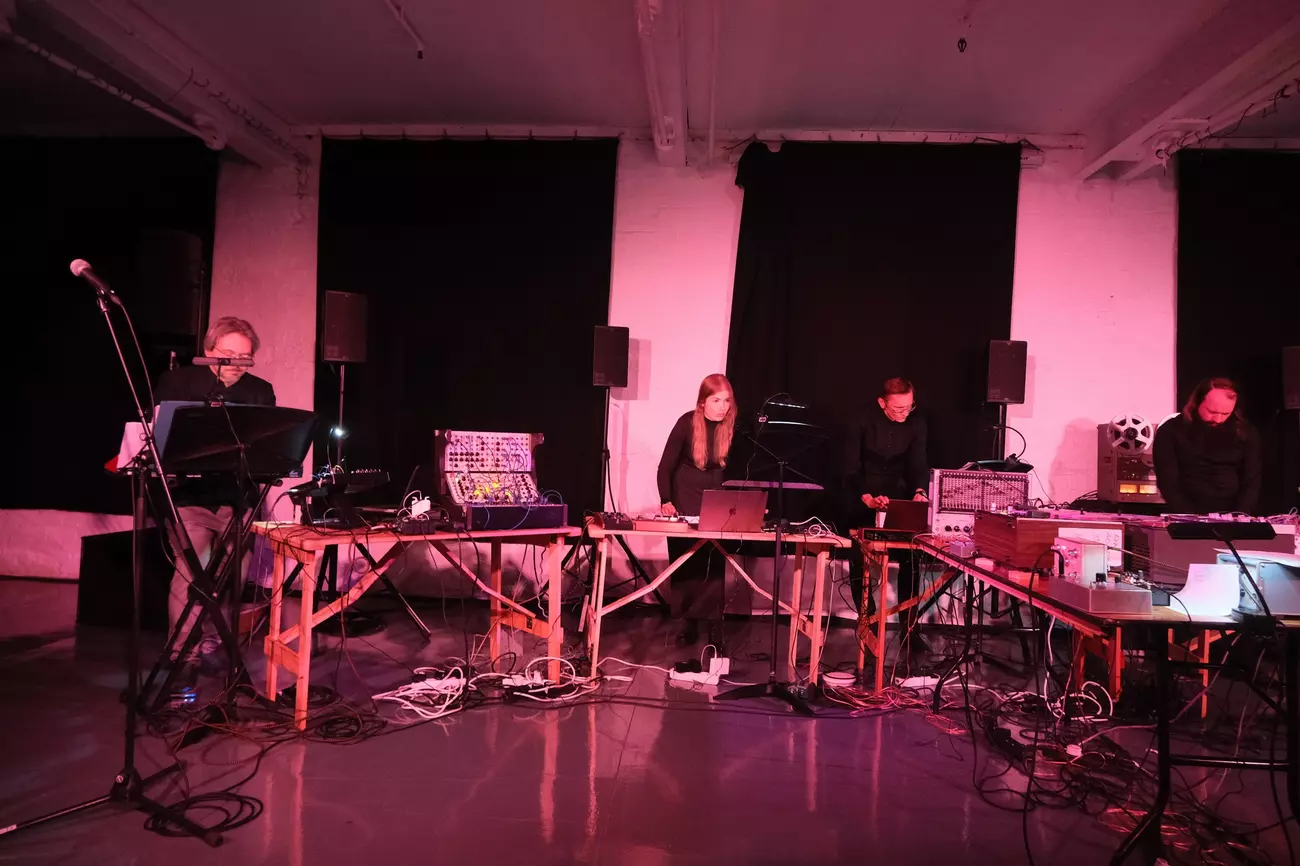
In Studio Tallinn 1965, by ensemble EMA
Live electronics has become an essential tool for music making for (not only) the younger generation of musicians worldwide. It has contributed to democratisation of music making, allowing people with no classic education of interpreters or composing to stages in various genres. !It has also contributed a lot to the group of "hybrid" performer/composer to emerge both on the underground experimental and also "classical" contemporary music scene. Yet in the contemporary music scene composing for performers with live electronics especially for live electronic ensembles is still not very widely spread among classically educated composers. It is mainly due to a certain conservative mindset in some conservatories but mainly also because of a lack of qualified teachers in the field yet of good knowledge-base and experience in both working with live electronic compositions and performance practice. The workshop led by EMAin partnership with Erica Synths is designed for composers who want to dive into composing for live electronics ensemble, encouraging composers with no previous experience on the field as well as the ones with some experience to join.
“Tallinn 1965” is an open experimental, multifunctional analog music studio. Alongside modern phonics, analog devices from decades ago are also put to work for recording sounds (professional old-time studio tape recorders) as well as creating music (classical oscillators, filters, echo machines). We approach music through the concrete artifacts and technological layers that range from hardware to software processes that have been part of the circulation of time and memory that condition the knowledge, but also the perceptions, and the sensations.More info: info@eccm.ee
During the practical workshop, ensemble EMA gives feedback to the piece in works from a performer's perspective. The ensemble also helps to develop the sound design, help to plan technical solutions, give feedback and advice in notation. A simple practical reading session by the ensemble of the works in progress is also planned. The practical working sessions with composers are open to observe by other participants of the workshop.
Limited to 6, participants are selected upon a description of their composition in progress and what they want to address during the workshop. Drawing on material created during a one-week residency at the ECCM, the workshop will present work-in-progress excerpts that offer insight into the evolution of musical ideas. Through live demonstration and discussion, participants will engage directly with the creative process through dialogue and exchange of perspectives on composition and artistic development.